January 29, 2026
🧠 Why Children Are Such Picky Eaters
The Psychology Behind Nuggets, No Veggies, and Total Food Control
The Short Answer
Kids aren’t picky because they’re spoiled, dramatic, or trying to drive parents insane.
They’re picky because their brains are wired to be.
Picky eating is less about food — and more about control, safety, sensory overload, and evolutionary survival instincts.
1. Picky Eating Is an Ancient Survival Feature
From an evolutionary standpoint, children were designed to distrust unfamiliar foods.
Why?
Thousands of years ago, eating the wrong plant could literally kill you.
Children’s brains evolved to:
Prefer bland, predictable foods
Reject bitter tastes (often associated with poison)
Be suspicious of new textures, smells, and colors
This is called food neophobia — fear of new foods — and it peaks between ages 2–6.
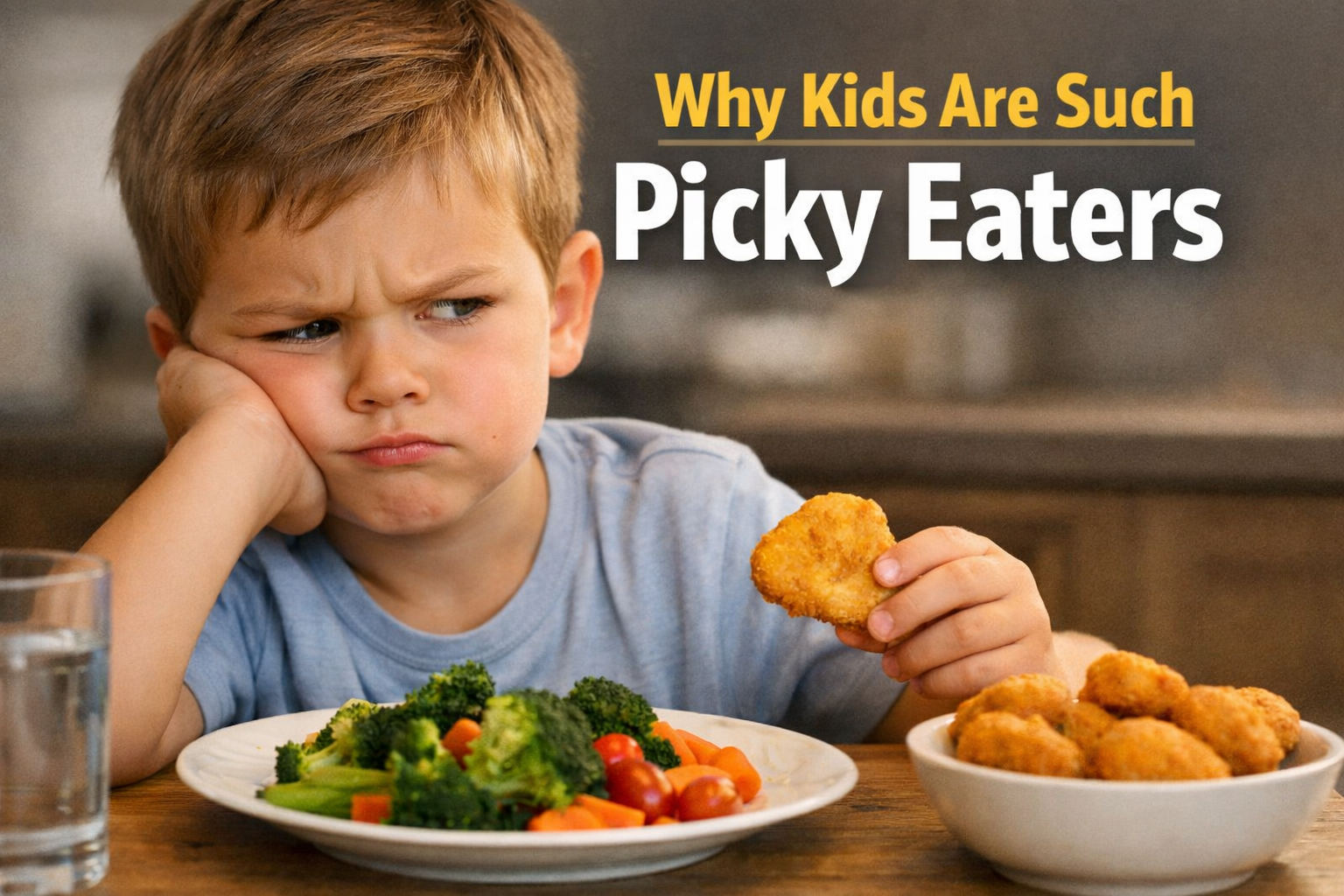
➡️ Chicken nuggets are safe.
➡️ Broccoli is unknown territory.
2. Taste Buds Hit Kids Differently
Children don’t taste food the way adults do.
They have:
More taste buds
Heightened sensitivity to bitterness
Stronger reactions to texture and smell
That means:
Vegetables can taste overwhelming
Sauces can feel “slimy”
Mixed foods can feel chaotic
To a kid, some foods don’t taste “bad” — they feel physically wrong.
3. Food Is One of the First Places Kids Get Control
Children have very little power in their lives:
When to sleep
Where to go
What to wear
Who’s in charge
Food becomes one of the first arenas of autonomy.
Saying “no” to food is often a child saying:
“This is something I get to decide.”
The more pressure, bargaining, or force around eating…
the more resistance tends to grow.
4. Repetition = Safety, Not Laziness
Kids who eat the same foods over and over aren’t being lazy — they’re seeking predictability.
Familiar foods:
Look the same every time
Taste the same every time
Feel the same every time
That predictability reduces anxiety.
In a world that constantly changes, food becomes a stability anchor.
5. Texture Matters More Than Flavor
Adults focus on flavor.
Kids focus on mouthfeel.
Common texture deal-breakers:
Mushy
Crunchy in the wrong way
Mixed textures (e.g., soup with chunks)
“Wet” foods touching dry foods
This is why a kid may love apples but hate applesauce — same flavor, different experience.
6. Picky Eating ≠ Bad Parenting
This is the part parents rarely hear (but need to):
Picky eating is extremely common, developmentally normal, and usually temporary.
Most children:
Expand their diet naturally over time
Grow out of intense pickiness
Learn variety through exposure, not force
What helps most:
Low pressure
Repeated exposure (without demands)
Modeling (kids copy adults more than they obey them)
The Superlooped Take
Picky eating isn’t defiance.
It’s biology + psychology + control + sensory processing.
Children aren’t rejecting food.
They’re navigating safety, autonomy, and a nervous system still under construction.
And yes — most of them eventually eat the vegetables.